


Pericardiocentesis at Veterinarium - A Highly Complex Clinical Case
15 April 2026
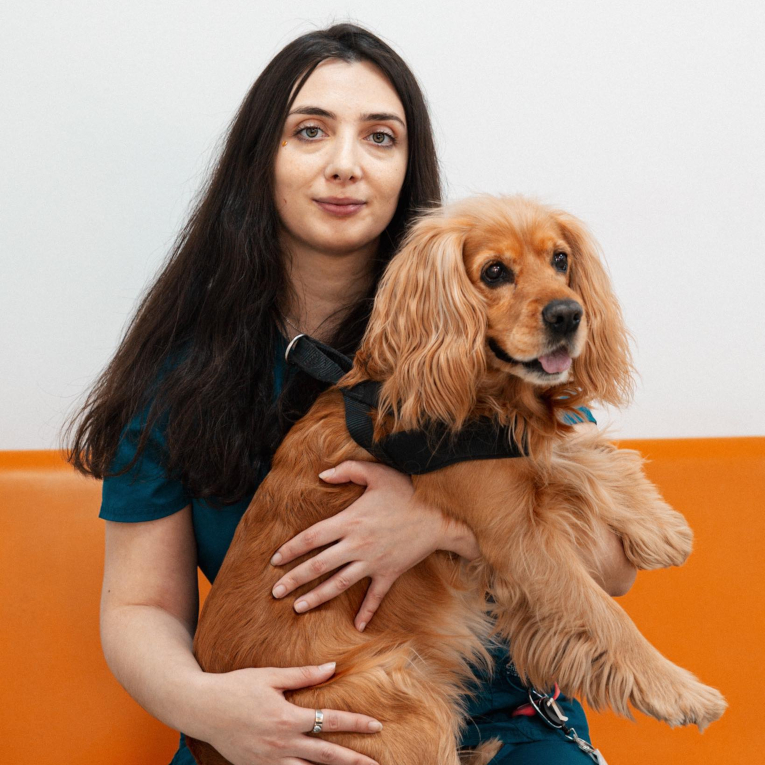
Shelby, a 7-year-old Cocker Spaniel, was presented to Veterinarium in critical condition. Prior to admission, she had been treated at another clinic, where no definitive diagnosis had been established, and her condition had progressively deteriorated.
Upon presentation, an urgent thoracic ultrasound examination was performed, revealing a large volume of pericardial effusion causing significant cardiac compression. This resulted in cardiac tamponade - a life-threatening condition requiring immediate intervention. In such cases, the accumulation of fluid within the pericardial sac impairs normal cardiac filling and compromises hemodynamics, leading to inadequate organ perfusion. Without prompt treatment, irreversible changes may occur, potentially resulting in death. Additionally, a substantial amount of free fluid was identified within the abdominal cavity, further worsening the patient’s clinical status.
Based on ultrasonographic findings, Veterinarium’s cardiologist and anesthesiologist, Natia Robakidze, made the decision to perform pericardiocentesis. This procedure involves ultrasound-guided evacuation of fluid from the pericardial sac using a catheter.
Due to marked dyspnea and the patient’s inability to remain still, physical restraint would have significantly increased the risk of fatal complications. Therefore, a decision was made to proceed under sedation. Sedation in critically ill patients is particularly challenging. However, Natia Robakidze’s international training in both anesthesiology and cardiology enabled a comprehensive and holistic clinical approach.
The pericardiocentesis was successfully performed, with complete aspiration of pericardial fluid. This resulted in stabilization of cardiac hemodynamics, after which intensive care management was initiated.
An abdominocentesis was also performed, allowing evacuation of free fluid from the abdominal cavity. Subsequent laboratory investigations revealed electrolyte imbalances, which were also life-threatening and required correction. Shelby remained under intensive care throughout the day, followed by several days of continued stabilization.
The underlying cause of her condition was ultimately identified as a cardiac wall neoplasm. Approximately 2 weeks after stabilization, the presence of the mass was confirmed via computed tomography and follow-up echocardiography.
Several months after the initiation of treatment, Shelby remains in stable condition.
She has regained normal activity levels, and periodic follow-up examinations are being conducted to monitor cardiac function and assess the progression of the mass.