



Treating Femoral Fracture with an Interlocking Intramedullary Nail
09 June 2026
Only at Veterinarium in Georgia: Treating Herzog’s Complex Femoral Fracture with an Interlocking Intramedullary Nail.
Herzog, a mixed-breed cat, suffered a comminuted fracture of the right femur (AO 32C3). In fractures of this type, achieving perfect anatomical reconstruction of every fragment is not essential. Instead, the primary surgical goal is to restore proper alignment and preserve the length of the bone.
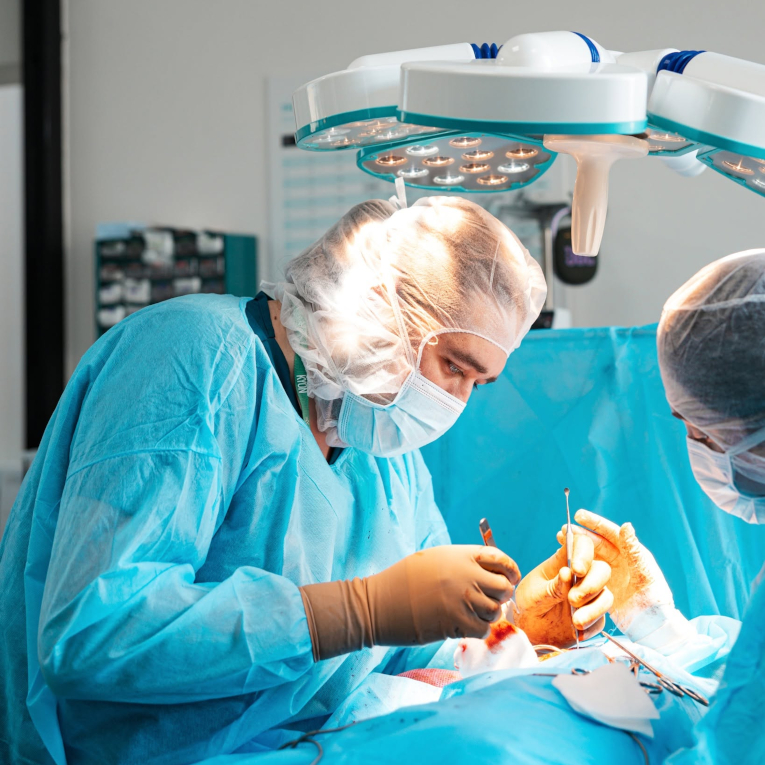
One of the most reliable and effective methods for achieving this is the use of an interlocking intramedullary nail. Herzog's surgery was planned and successfully performed by Veterinarium's Head Veterinarian, Dr. Lasha-Giorgi Japaridze.
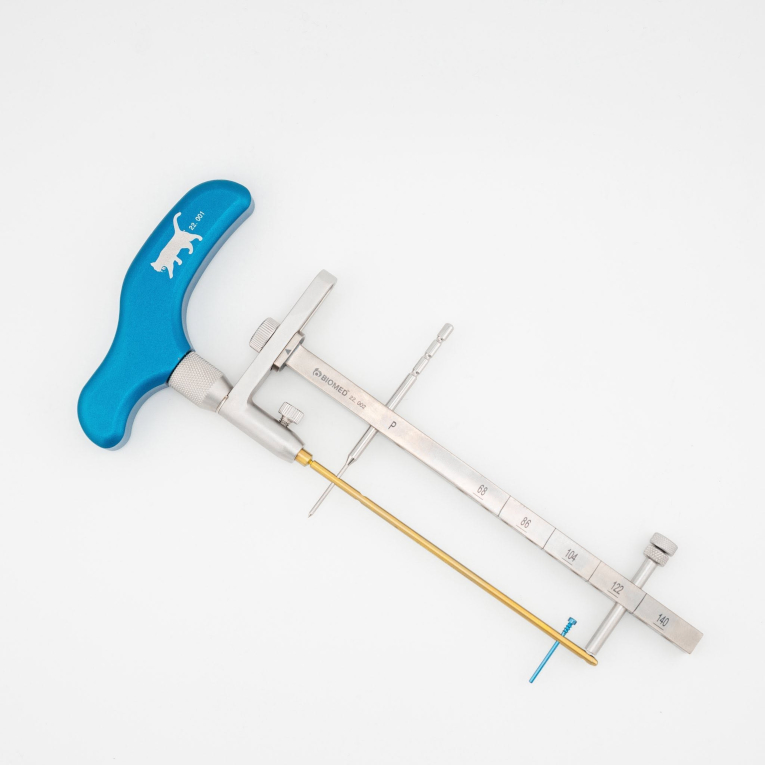
For the first time in Georgia, Veterinarium has introduced the I-Lock Interlocking Nail System, developed by the Finnish company Mathemedix Oy. This system is considered one of the leading contemporary solutions in veterinary orthopaedics for the surgical management of long bone fractures.
This system allows for the placement of a specialized interlocking intramedullary nail within the bone, which is further secured with locking screws to maintain stable and precise alignment. This technique provides both axial and rotational stability, which is particularly important in the management of complex fractures. Due to these advantages, similar fixation methods are widely used in human medicine for diaphyseal fractures of long bones.
Studies have demonstrated that interlocking nail systems can withstand approximately four times greater loads than alternative fixation methods, significantly increasing construct reliability and reducing the risk of implant failure.
As noted in the 2024 scientific article “A generic precurved interlocking nail is more compatible with femoral and tibial morphology than a straight nail in dog”: “Interlocking nails have been shown to offer greater stiffness in compression and 4-point bending and greater resistance to failure in compression, torsion, and 4-point bending than locking compression plates.”
In addition, this approach significantly reduces soft tissue trauma, lowering the risk of complications and improving overall clinical outcomes.
Full article: https://avmajournals.avma.org/.../86/3/ajvr.24.09.0267.xml
Similar news
03 July 2026
Thoracoscopic removal of a foreign body
20 June 2026
Mushu the Cat Undergoes Partial Carpal Arthrodesis at Veterinarium
15 June 2026
TPLO surgery
05 June 2026
Barbare Kurtsikidze will undertake professional training in Estonia

02 June 2026