



Business School
Bachelor’s Program in Business Administration
Bachelor’s Program in Business Administration Description
In 2011, a memorandum of cooperation was signed between the Business School of the Agricultural University of Georgia and the Free University of Tbilisi Business School ESM. As a result, the Bachelor's Program in Business Administration of the Agricultural University of Georgia was completely renewed.
The objective of the Bachelor's Program in Business Administration at the Agricultural University of Georgia is to prepare aspiring, versatile managers and analysts with thorough knowledge of business and business project management and evaluation tools. Graduates will be well-equipped to find employment in growing and dynamic industries.
Within the program, the student learns the basic principles of business management, and develops a market-oriented view of business and management. The program is largely based on case studies and covers subjects such as Business Foundations and Business in Action, Management, Human Resources Management, Quality Management, Supply Chain Management, Financial Accounting, Managerial Accounting, Corporate Finance, New Product Development, Project Management, Marketing Management, Integrated Marketing Communications and more.
As part of the program, students work on analyzing and solving various cases, developing business plans, and creating and presenting projects, all of which help to enhance their analytical and practical skills.
Upon successful completion of the 7-semester program, the graduate is awarded the qualification - Bachelor of Business Administration.

Curriculum
The curriculum for the Bachelor's Program in Business Administration consists of 200 credits, allocated across the following modules:
- University General Education - each student enrolled in the university's bachelor's programs, in addition to specialized subjects, also takes general subjects, contributing to the elevation of general education and the expansion of their field of interests.
- Foundational Education in the Field of Study - this module encompasses essential foundational subjects specific to business studies, such as Business Statistics, Excel for Business, Calculus, , Data Analysis, Applied Statistics, Introduction to Digital Technologies, Fundamentals of Law, Law and Economics, Business English and others.
- Core Education in the Field of Study - this module covers the basic theoretical and practical courses required to study the field of business administration, for example: Business in Action, Business Law, Decision-Making Methods, Principles of Management, Human Resources Management, Quality Management, Supply Chain Management, Marketing Management, Corporate Finance, Taxation Foundations, Financial Institutions and Markets, New Product Development and more.
- Practical Education - this module includes the subject Internship in an Organization, within which students complete internships or work in various organizations. At the end of the semester, students prepare a brief report detailing their work experience and how they applied the knowledge and skills acquired at the university in different situations.
- Elective Courses - students have the flexibility to choose additional courses based on their interests. They also have the option to pursue an additional 12 credits of courses outside the program requirements at no extra cost.
Admission conditions 2023
About the School
The Business School at the Agricultural University of Georgia offers two accredited programs:
- Bachelor's Program in Business Administration
- Bachelor's Program in Liberal Arts
In 2011, a memorandum of cooperation was signed between the Business School of the Agricultural University of Georgia and the Free University of Tbilisi Business School ESM. As a result, the Bachelor's Program in Business Administration of the Agricultural University of Georgia was completely renewed. The program addresses the challenges of modern business and explores strategies for overcoming them. This approach to learning fosters problem-solving skills, critical and logical thinking, and prepares students for the daily challenges of managing a business.
Subsequently, the Business School introduced the Bachelor's Program in Liberal Arts. This program is modeled after the Liberal Arts programs of American universities and is based on the classical European education system (Artes Liberales).
11 July 2026
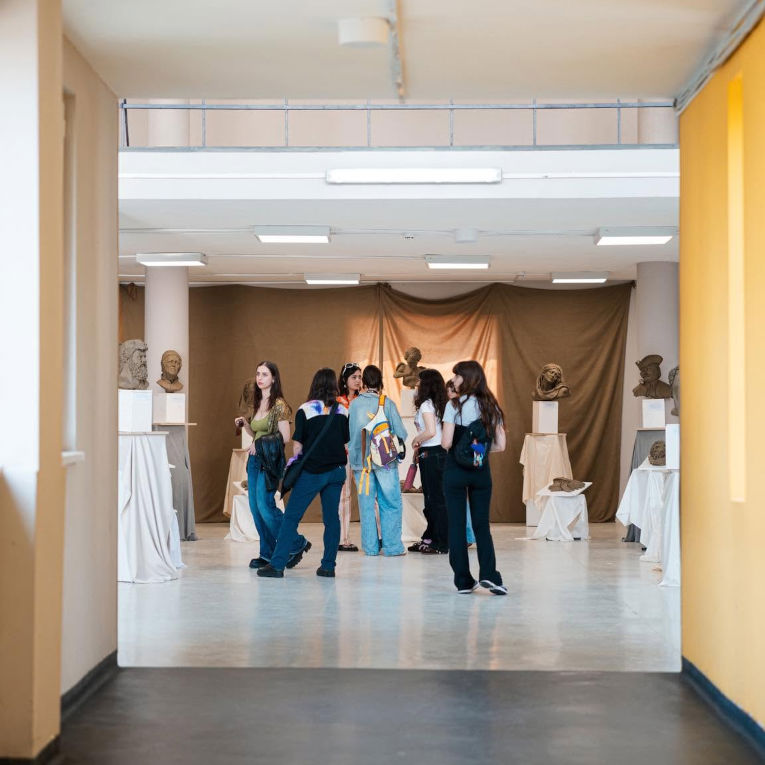
სტუდენტური გამოფენა

11 May 2026
ნინი სებისკვერაძე სწავლას აგრძელებს ავსტრიაში, Central European University (CEU)-ში

21 January 2026
თამარ ქავთარაძე სწავლას აგრძელებს Montpellier Business School (MBS)-ის საბაკალავრო პროგრამაზე

25 August 2025
ბერიკა ებანოიძე სწავლას აგრძელებს საფრანგეთში, ESDES School of Business and Management-ში
Dean

Head of the program

Coordinator

Teko Dzidziguri
Coordinator of the Bachelor’s Program in Business Administration