


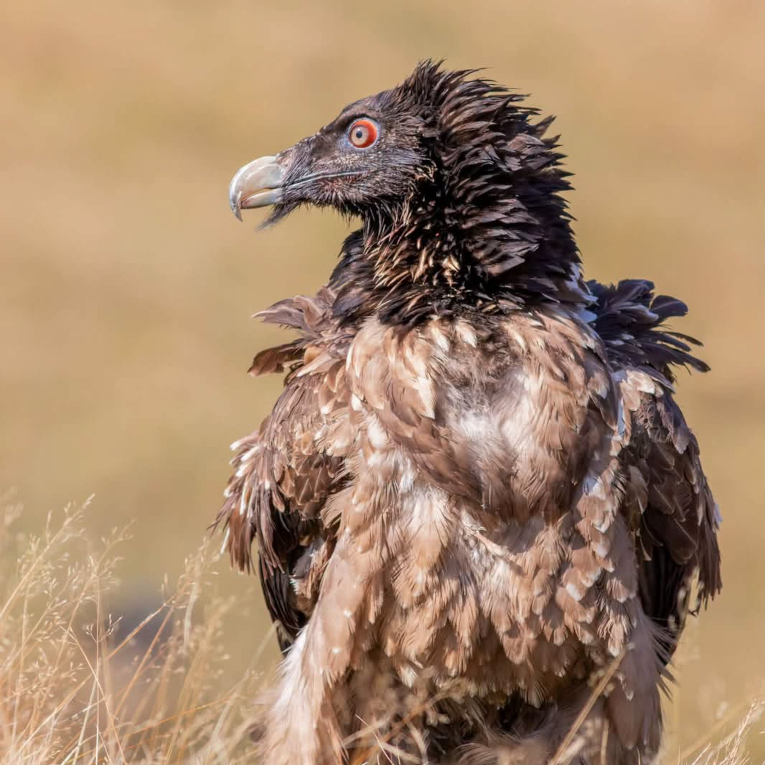
A bearded vulture has recovered and returned to the wild
21 October 2026
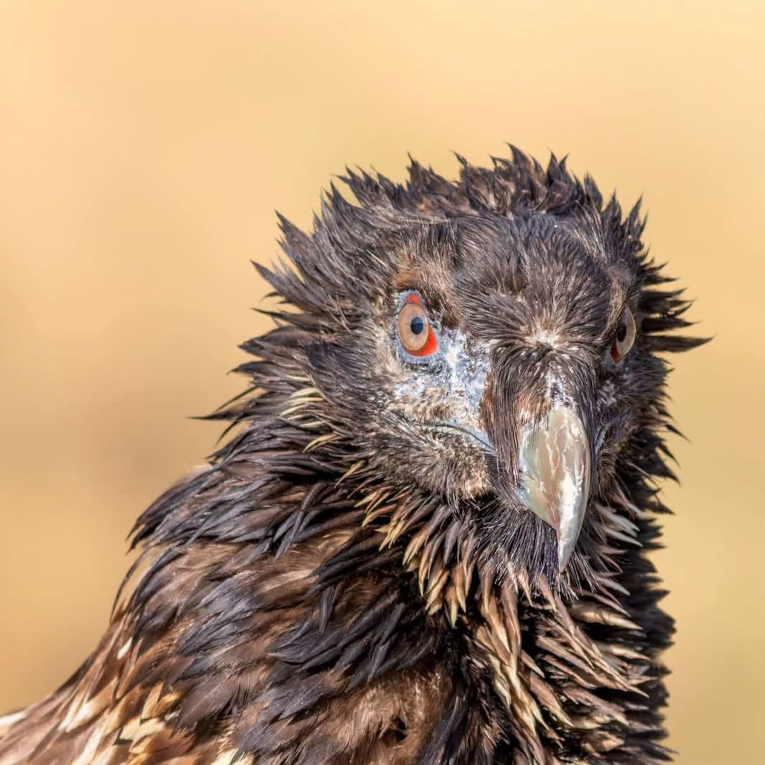
Found in June, this juvenile bearded vulture (Gypaetus barbatus), less than a year old, was severely debilitated and unable to fly. Vitali Kashakishvili and Giorgi Parkauli, who found the bird, named it Lukhuma.
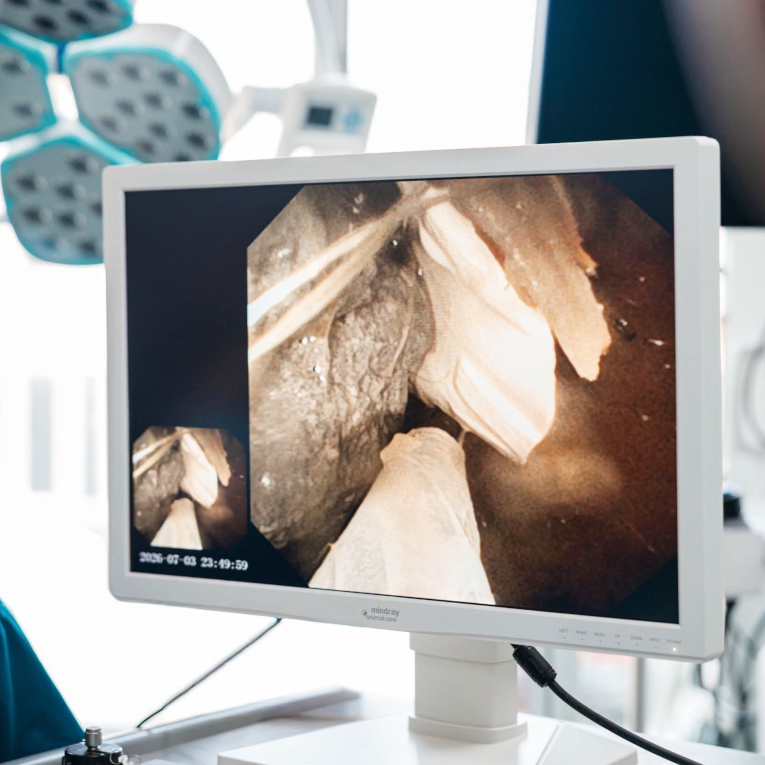
Radiographs taken at Veterinarium revealed stones in the bird’s stomach. A CT scan was also performed at VET CT, located on the Kakha Bendukidze Campus.
Bearded vultures are scavengers, with bones making up approximately 70-90% of their diet. Their highly acidic stomach contents allow them to digest bones, so, unlike many other birds, they do not need to swallow stones to aid digestion. Such stones are generally swallowed accidentally along with food or, occasionally, when the bird cannot find enough bones.
In Lukhuma’s case, one of the stones was too large and heavy for the bird to regurgitate. The team monitored Lukhuma for 4 days to see whether the stone would be regurgitated naturally. However, the foreign body was causing persistent spasms, further weakening the bird.
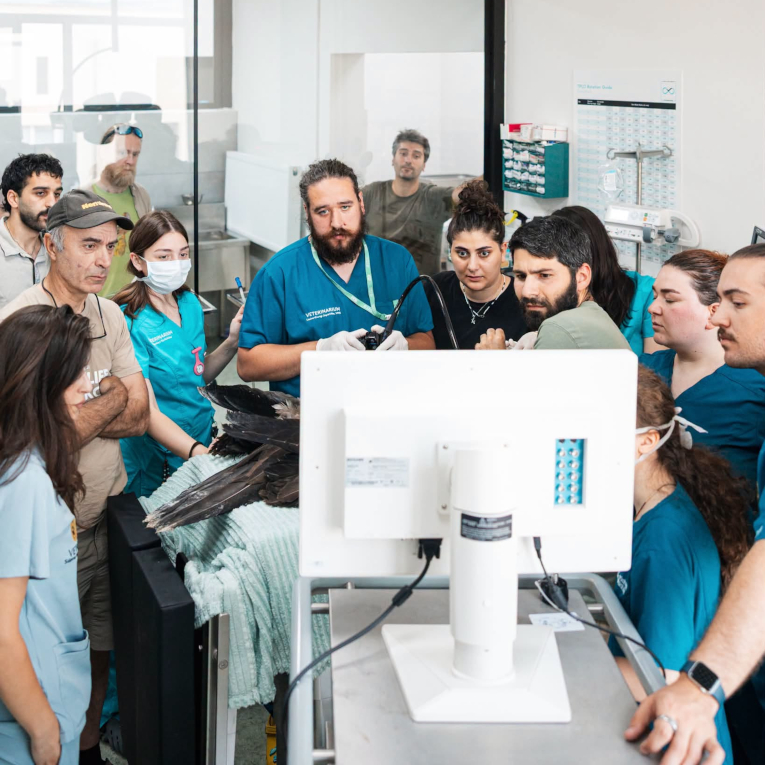
To remove the foreign bodies, Veterinarium’s Head Veterinarian, Dr. Lasha-Giorgi Japaridze, performed a gastroscopy and retrieved the stones. Anaesthesia was managed by Giorgi Makharadze. Following the procedure, the bearded vulture was temporarily transferred to Tbilisi Zoo, where Ana Dzaganashvili, Lasha Chichua, Mtvarisa Gogatishvili and Givi Chitanava provided daily care and treatment.
Later, the bird developed suppurative lesions around the right cheek and upper jaw, as well as on its toes, with an underlying avian poxvirus infection suspected. Lukhuma was brought back to Veterinarium, where an abscess was drained and the purulent material was cleared from the cavity. Lasha-Giorgi Japaridze and Giorgi Makharadze prescribed appropriate treatment.
Over 4 months, Luka Tkemaladze, Lexo Gavashelishvili, Giorgi Makharadze and Lasha-Giorgi Japaridze worked alongside Tbilisi Zoo staff, each contributing their expertise to the bearded vulture’s recovery and preparation for release into the wild. Team members regularly visited the bird at the zoo, monitored its condition and brought it to Veterinarium for procedures as needed.
Before release, Luka Tkemaladze and Lexo Gavashelishvili fitted Lukhuma with a GPS transmitter to track its movements and monitor habitat use.
Following its recovery, the team released Lukhuma back into the wild in Tbatana on 18 October.
Photographs taken at the clinic are by Giorgi Jokhadze; those taken in the wild are by Giorgi Makharadze.
Similar news
19 October 2026
WSAVA-PSAVA-FECAVA World Congress 2026
17 October 2026
WSAVA-PSAVA-FECAVA World Congress 2026
15 October 2026
Veterinarium veterinary assistant Luka Ghlonti is undertaking 2 months of practical training in Estonia
13 October 2026
Mari Kapanadze is undertaking professional training in Estonia
06 October 2026