



Matthew, a French Bulldog
27 October 2026
Meet Matthew, a French Bulldog aged 6, who was brought to Veterinarium with an ear problem that had started approximately three months earlier.
Initially, Matthew had pain in his left ear. Treatment prescribed at another clinic failed to resolve the problem. After starting the prescribed ear drops, his condition worsened: his voice changed, he developed a head tilt towards the painful ear, and the pain subsequently affected his right ear as well.
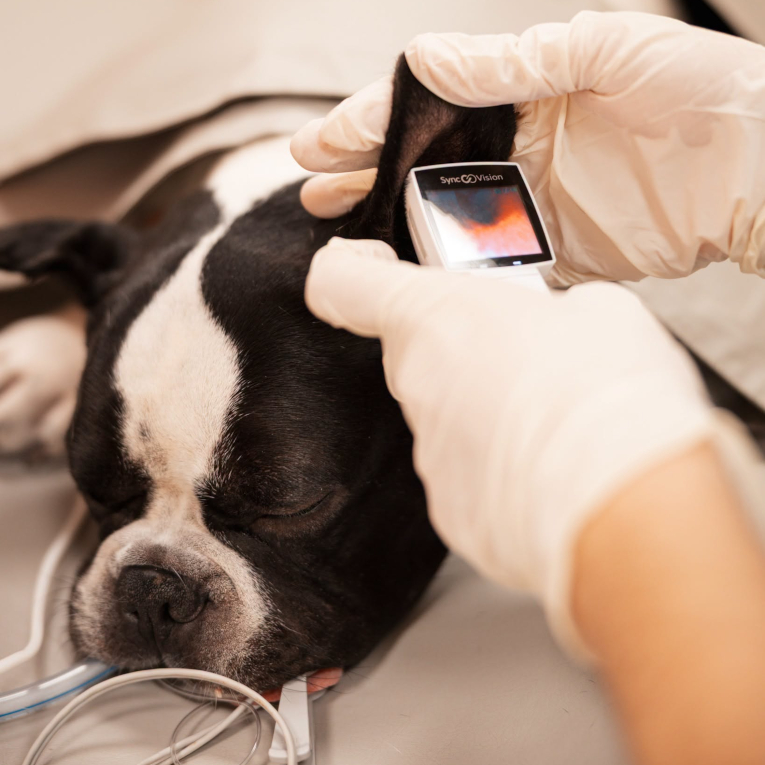
By the time Matthew arrived at Veterinarium, he was experiencing severe pain with neuropathic features. Otoscopic examination revealed copious yellowish, purulent discharge, making it impossible to assess whether his eardrum was intact. Veterinarium internal medicine specialist Richard Tavdgiridze suspected severe inflammation of the external and middle ear, with possible inner ear involvement, and recommended a CT scan to investigate further.
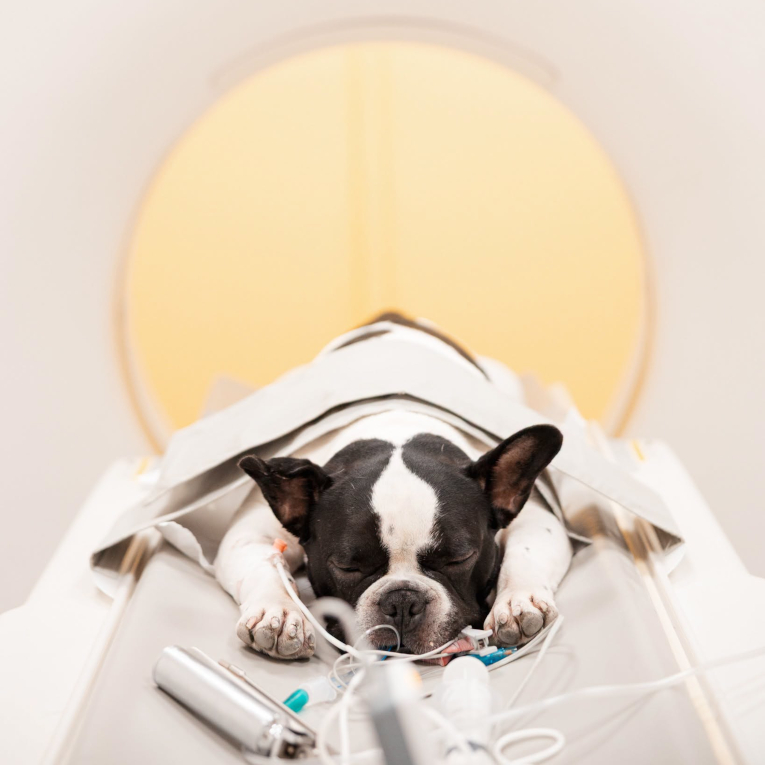
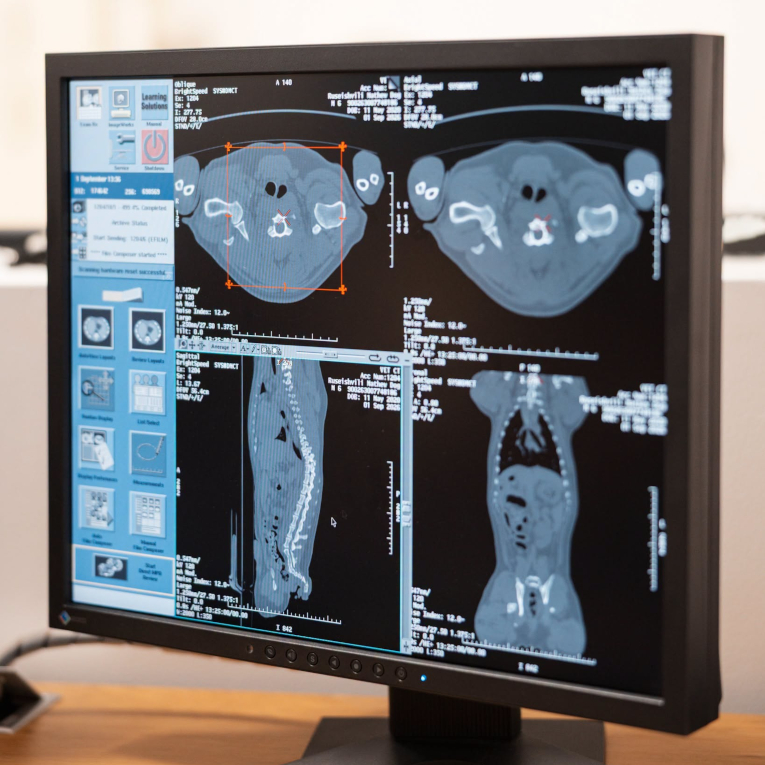
Matthew underwent imaging at Vet CT, the veterinary computed tomography centre on the Kakha Bendukidze Campus. The scan confirmed the veterinarian’s clinical suspicion, revealing inflammation of the external and middle ear, with disruption of both the eardrum and the bony wall of the middle ear cavity, known as the tympanic bulla. Many commonly used ear drops can be ototoxic when the eardrum is damaged. This means they may damage the structures responsible for hearing and balance and cause neurological signs. In Matthew’s case, the deterioration was suspected to be related to ear drops prescribed at the previous clinic without adequate consideration of this risk.
Matthew was ultimately diagnosed with bilateral otitis externa and otitis media, meaning inflammation of the external and middle ear on both sides, with polyps, fibrous masses and fluid within the tympanic bullae.
A deep ear swab was also collected for cytology and bacterial culture. Testing revealed large numbers of fungal organisms and bacteria, with Staphylococcus epidermidis identified on culture. Several weeks into treatment, repeat bacterial culture and antimicrobial susceptibility testing showed that the isolated bacterium was no longer susceptible to the antibiotic initially selected. His antibiotic treatment was therefore changed. Treatment also included antifungal medication, measures to reduce inflammation and pain management.
Repeat cytology in October showed no detectable fungal organisms and a substantial reduction in bacterial numbers, indicating a positive response to treatment.
Today, Matthew is feeling well. His ear pain, head tilt and voice changes have resolved, although he is still continuing treatment.

Similar news

28 October 2026
The story of a greedy little kitty

21 October 2026
A bearded vulture has recovered and returned to the wild
19 October 2026
WSAVA-PSAVA-FECAVA World Congress 2026
17 October 2026
WSAVA-PSAVA-FECAVA World Congress 2026
15 October 2026