


Sunny’s Story
11 November 2026
Sunny’s Story: Improving Quality of Life in End-Stage Heart Disease
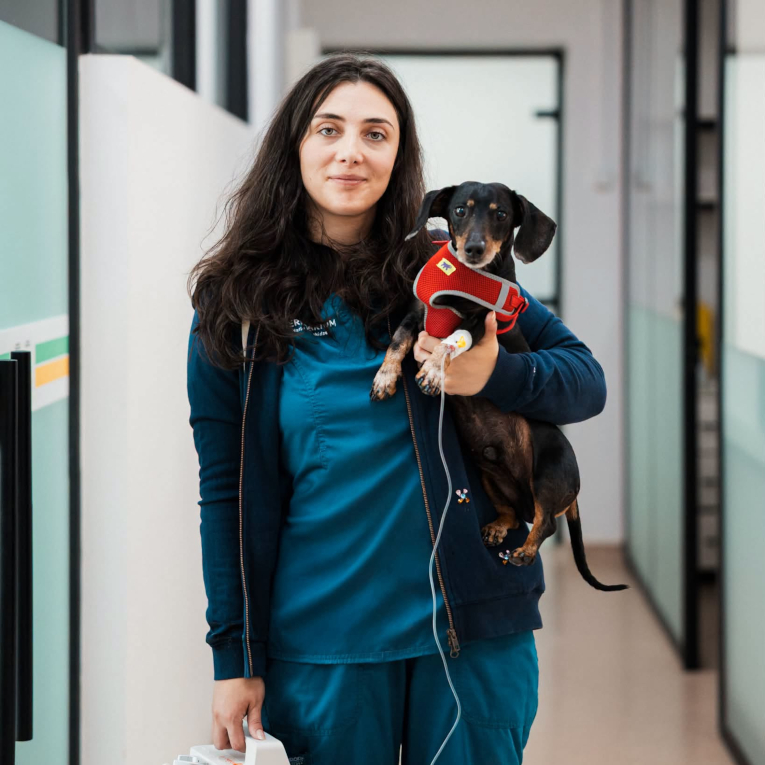
Meet Sunny, a 12-year-old Dachshund who was brought to Veterinarium for a cardiology consultation 8 months ago.
Shortly before his visit to Veterinarium, Sunny had undergone a cardiac ultrasound examination at another veterinary clinic, where no abnormalities had been detected. Despite this, his condition continued to deteriorate. He was experiencing coughing, restlessness, shortness of breath, exercise intolerance, and difficulty breathing.
As Sunny’s clinical signs continued to progress, his owner decided to seek a second cardiac evaluation at Veterinarium.
Sunny was examined by our veterinary cardiologist, Natia Robakidze. Based on his medical history and physical examination findings, thoracic radiographs were recommended. The X-rays revealed cardiomegaly (an enlarged heart) and pulmonary edema.
A subsequent echocardiographic examination revealed a severe cardiac condition: end-stage myxomatous mitral valve disease (MMVD), classified as ACVIM Stage D.
According to the American College of Veterinary Internal Medicine (ACVIM) classification, Stage D represents the most advanced, refractory stage of congestive heart failure, requiring particularly complex and intensive medical management.
Sunny also underwent a complete blood count, serum biochemistry profile, and electrolyte testing. Following a comprehensive assessment of all diagnostic findings and his clinical condition, Natia Robakidze, Veterinarium’s cardiologist and anesthesiologist, thoroughly explained the diagnosis, severity of the disease, prognosis, and available treatment options to Sunny’s owner.
Despite the advanced stage of his heart disease, an individualized long-term medical treatment and monitoring plan was developed for Sunny.
The treatment produced a positive clinical response. Sunny’s symptoms gradually improved and eventually resolved, relieving the persistent discomfort that had significantly affected his daily life and overall quality of life.
Over the 8 months since his initial consultation, Sunny has returned to Veterinarium multiple times for follow-up cardiac examinations and ongoing monitoring. Although his underlying heart disease remains advanced, he has maintained clinical stability with continued treatment and is currently feeling well.
Sunny’s story demonstrates that even in end-stage heart disease, accurate diagnosis, individualized treatment, regular monitoring, and an owner’s unwavering dedication can make a meaningful difference in a patient’s quality of life.
Sunny’s case is being managed by Natia Robakidze, Veterinarium’s veterinary cardiologist and anesthesiologist.
Similar news
10 November 2026
ლუკა ლორიას კომპანია ნუტრიმაქსმა ერთწლიანი სასწავლო სტიპენდია გადასცა
28 October 2026
The story of a greedy little kitty
27 October 2026
Matthew, a French Bulldog
21 October 2026
A bearded vulture has recovered and returned to the wild
19 October 2026